Walking is essentially a series of controlled falls. The human gait cycle is highly evolved for efficiency, utilizing a mechanism analogous to an inverted pendulum.
The Gait Cycle
The cycle is divided into two main phases:
- Stance Phase (60% of cycle): The period when the foot is in contact with the ground. It begins with heel strike and ends with toe-off.
- Swing Phase (40% of cycle): The period when the foot is in the air, advancing forward to prepare for the next heel strike.
Ground Reaction Forces (GRF)
During walking, your body experiences forces equal to 1.2 to 1.5 times your body weight with every step. This mechanical loading is crucial for maintaining bone density (Wolff's Law), but it is lower than the 2.5x to 3x body weight experienced during running.
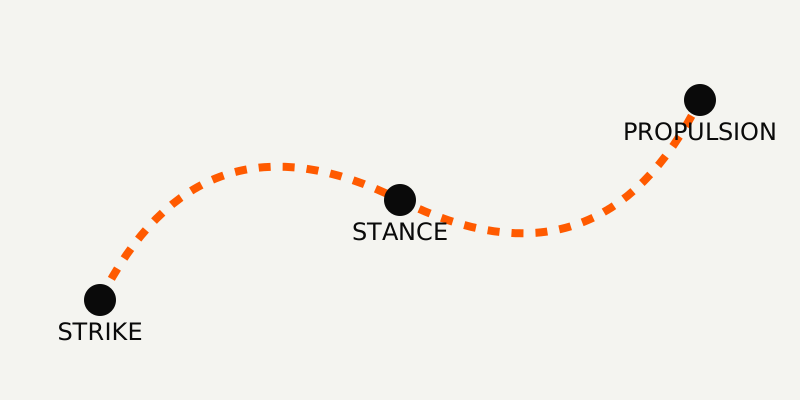
Optimizing mechanics involves maintaining an upright posture, engaging the glutes during the propulsive phase, and ensuring the foot strike lands under the center of mass rather than overstriding.